Why Do Your Customers Hate Leaving a €1,000 Deposit -And How to Stop Blocking Their Money?
You run a rental business -equipment, vehicles, vacation properties, whatever -and every time you ask for a security deposit, you watch the same scene unfold. The customer hesitates. They check their bank balance. Some abandon the booking entirely. Others complain for days after you’ve released their funds. The problem isn’t that you’re asking for protection. The problem is how traditional deposits work: you freeze their cash, they resent you for it, and you’re stuck managing refunds, disputes, and fraud risks manually.
Here’s what nobody tells you upfront: there’s now a way to secure your rentals without touching your customer’s available balance. This article breaks down exactly how it works, what it costs, and whether it actually protects you when something goes wrong.
What’s Actually Wrong With Pre-Authorized Card Holds and Cash Deposits?
When you take a traditional security deposit -whether it’s a card pre-authorization, a check, or cash -you’re temporarily removing money from your customer’s life. For a €1,000 deposit (common for vehicle rentals or high-end equipment), that’s roughly equivalent to a full month’s minimum wage in France sitting untouchable.
The downstream effects hit your business directly:
The real kicker: you’re doing all this administrative work, annoying your customers, and you’re still not fully protected. A bounced check or a disputed charge after damage occurs leaves you eating the loss.

How Does « Non-Blocking » Deposit Technology Actually Work?
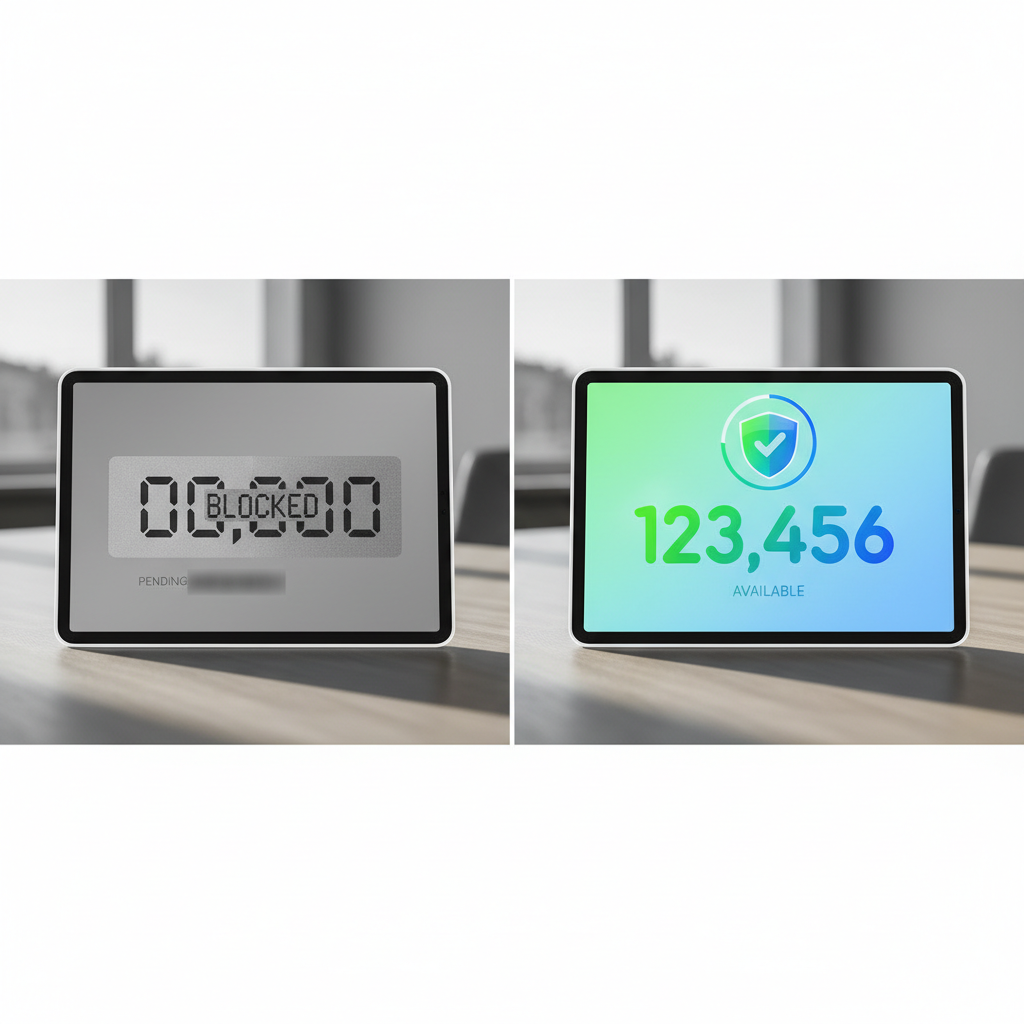
The concept sounds almost too good: secure a deposit without freezing funds. Here’s the mechanical reality behind platforms like Gando that offer this.
Instead of pre-authorizing or holding money, the system:
1. Verifies the customer’s payment method is valid and has sufficient backing
2. Runs a real-time risk score using banking behavior data (transaction patterns, account age, fraud indicators)
3. Creates a secured guarantee that you can draw from if and only if damage or loss occurs
4. Leaves the customer’s balance untouched unless you actually need to charge them
Think of it like the difference between a landlord holding your first month’s rent in escrow versus a guarantor who promises to pay if you skip out. The money exists, the commitment is real, but your cash keeps working for you.
The technical backbone involves open banking APIs (accessing transaction data with customer consent) and payment processor integrations that can capture funds on demand rather than holding them preemptively.
What Happens When a Customer Actually Damages Something?
This is the question that makes rental operators skeptical. If the money isn’t blocked, how do you actually get paid when there’s a €400 scratch on the equipment or a missing item?
The process with a non-blocking system typically works like this:
1. You document the damage (photos, inspection report) through the platform
2. You initiate a claim for the specific amount -not the full deposit, just what’s owed
3. The platform charges the customer’s verified payment method for that exact sum
4. Funds transfer to you, usually within 2-5 business days
The key difference from traditional holds: you’re capturing actual damages, not releasing a pre-blocked amount minus deductions. This tends to reduce disputes because customers see a specific charge for a specific reason rather than a mysterious partial refund.
What if the customer’s card declines at capture time? This is where the risk scoring matters. Platforms like Gando use banking data to assess payment reliability before you hand over the keys. High-risk profiles can be flagged for traditional deposits or declined entirely -your choice.
One operator using Gando reported their damage recovery rate stayed at 94% while customer complaints about deposit handling dropped by roughly 60%. The trade-off is trusting the risk assessment rather than holding hostage money.

What Does This Actually Cost You -And Your Customers?
Pricing transparency matters here because the economics determine whether non-blocking deposits make sense for your operation.
Taking Gando’s published rates as a benchmark:
Compare this to traditional card processing where pre-authorizations typically cost you 1.5-2.5% just to hold funds, plus another 1.5-2.5% if you capture, plus potential chargeback fees (€15-25 per dispute) if the customer contests.
The math works in your favor when:
If you’re running a high-volume, high-damage operation (think party equipment rentals where 30% come back needing repair), traditional holds might still make sense because you’re capturing frequently anyway.
One hidden cost to consider: customer acquisition. If even 5% of potential customers bounce because they can’t afford to have €1,000 frozen, and your average rental profit is €150, that’s real money walking out the door.

How Do You Actually Set This Up Without Rebuilding Your Whole Booking Flow?
Implementation complexity kills good ideas. Here’s what switching to non-blocking deposits typically involves:
Integration options range from simple to custom:
The typical timeline for a small rental business:
What you’ll need ready:
The dashboard component matters more than most operators expect. Being able to see all active deposits, customer risk scores, and historical patterns in one place transforms deposit management from a scattered headache into actual business intelligence.

What Are the Legal and Compliance Considerations You Can’t Ignore?
Collecting deposits -blocked or not -involves payment regulations, data handling, and customer rights. Here’s what you need to know:
Payment Services Directive (PSD2) in Europe requires strong customer authentication for payment initiation. Non-blocking systems that use open banking must obtain explicit customer consent to access banking data. This is actually a feature, not a bug: customers actively agree, creating a paper trail.
GDPR implications: Banking behavior data used for risk scoring is personal data. Ensure your chosen platform has compliant data processing agreements and doesn’t retain information beyond what’s necessary.
Consumer protection: In most EU jurisdictions, you cannot charge a security deposit beyond actual demonstrated damages. Non-blocking systems actually align better here because charges are damage-specific rather than « we’re keeping €200 of your €1,000 hold. »
Chargebacks still exist: Even with risk scoring, customers can dispute charges with their bank. The difference is you’ll have documented damage evidence tied to a specific transaction rather than trying to explain why you only partially released a pre-authorization.
One compliance advantage: the 60-day security window some platforms offer (Gando includes this) means you can charge for damages discovered after the rental ends -like hidden scratches found during deep cleaning. Traditional holds typically expire at return, leaving you unprotected for delayed discoveries.
Your next move: if you’re losing bookings to deposit friction or spending hours on refund administration, test a non-blocking system on a subset of your rentals. Track abandonment rates, support tickets, and recovery rates for 30 days. The data will tell you whether the switch makes sense for your specific operation -no faith required.
Aucune réponse